
Neurodivergence and Me


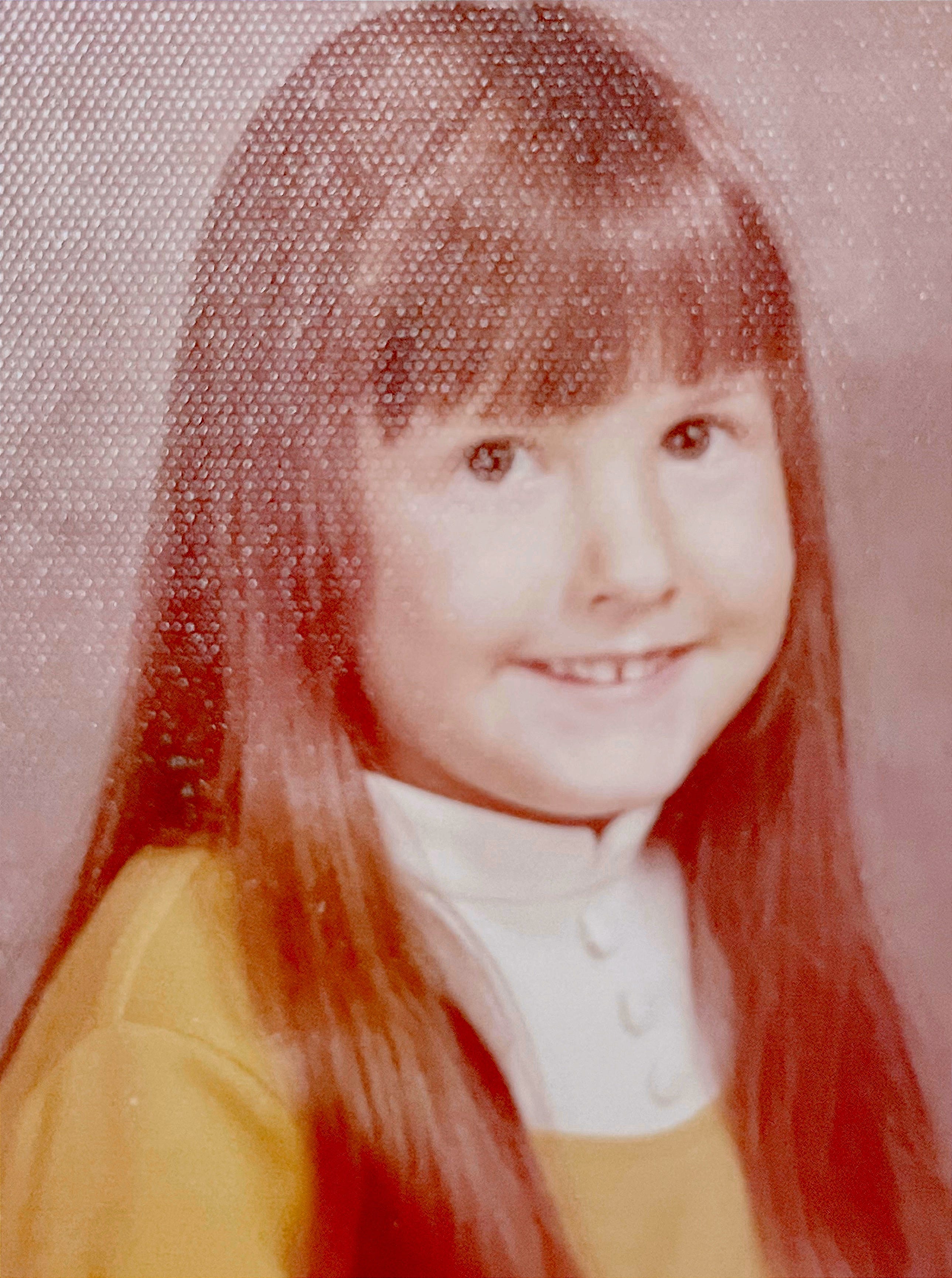
You may or may not know that I’m a cohost on the college admissions podcast Your College Bound Kid, but one of the running jokes I have with my cohost, Mark Stucker, is my difficulty with math and numbers. When Mark did a survey about listener opinions, one listener was unhappy with how often I mentioned this, and implied I was copping a “dumb woman” attitude and discouraging other women from doing math.
The thing is, I have a learning disability called dyscalculia, which affects my ability to do math, my sense of direction (or lack thereof) and causes difficulty learning motoric tasks. This not only made math class a challenge, but I had difficulty doing things like learning to drive without a lot of extra practice. My husband, who constantly had to field panicked calls from me when I got lost, kept a map at his desk at work, and was overjoyed when some saint finally invented the GPS. Perhaps most painfully, it cost me the opportunity to go to a summer gifted program in high school when I could not do the block design or puzzle problems on the IQ test, depressing my score to just below the threshold for admission. My friends all went for the summer, and when they came back, they weren’t my friends anymore. Teenage Lisa was sad for a while about that.
Back to the present. Do I know my right from my left? Not so much. Have I gotten a great deal of criticism for all of these failings over the years? I sure have. I didn’t even realize that dyscalculia was a thing until about fifteen years ago, when I came across the description of it through my work. I realized that it explained so much not only about my life, but my mother’s and maternal grandmother’s lives as well.
Luckily, we three women were all able to work around these problems even if we didn’t know what it was called. We all drove, although not without anxiety. We all eventually got to where we were going, and we all learned whatever motoric tasks we needed to do by working harder and longer. In fact, I don’t think of any of us as “dumb women”. My grandmother was so advanced at school that she graduated from high school at age fourteen, and ended up as the executive secretary for the president of a large company, which truthfully she basically ran from behind the scenes. It tanked after she retired, and in a different time, she’d have been the president herself. My mother was valedictorian of her high school class, class president, whizzed through nursing school, and now has a PhD from Washington University in St. Louis in physical anthropology. Both of these brilliant women taught me to work harder than the competition, to check and recheck your work, and to never count yourself out, no matter how hard something was–there was always a workaround if you could just find it. For my math classes, my workaround was that I memorized the crap out of every formula and spent countless hours practicing problems ad nauseam, so that I would often get the highest score in the class on the test even though I had no real understanding of the mathematical theories involved.
My mother and grandmother also taught me that whatever you accomplished, it was important to be humble, to be honest, and to admit your shortcomings, and not take yourself too seriously.
My podcast jokes about my problems with math were made in this vein. Do I think I’m a “dumb woman”--umm, no. I graduated with a 3.8 GPA from the University of Chicago in an era where there was no grade inflation, I managed to get a scholarship to Northwestern University’s Clinical Psychology PhD program because of my high GRE scores, and I’m pretty awesome at maximizing my credit card travel points. Can I understand what a derivative is? Not a chance. Could I get lost on the way to my kid’s school even though I’ve been driving there for five years? You betcha. Do I judge myself negatively on any of these things–of course not. I have come to accept that this is how my brain works or how it doesn’t, and that I just need to work with what I’ve got. Plus, my husband is an actuary and can do math in his head, and my daughter has an incredible sense of direction. I’ve learned to let them “scaffold” me, and since they both have ADHD, I’m scaffolding them back with all of my helpful, er, reminders (okay nagging).
I definitely wasn’t alone in my neurodivergence in my family–we all had something. While my mother and I were super-readers (I taught myself to read when I was three years old), my father and brother were horribly dyslexic. My father, the eldest son in a Jewish family, drove my grandparents crazy with his poor academic performance, and resulting behavioral problems at school. He did not fit the mold and wasn’t going to college or becoming a doctor or lawyer, as they had hoped. In fact, he barely graduated high school, left home, and started working in radio, where he could rely on his ability to memorize what he heard, and then in television, which was all visual and didn’t need him to read or spell. He ended up having a very varied and successful career, and took my family out of poverty to an upper-middle class existence. He put my brother, my mother, and myself all through college and graduate school even though he had no advanced degree himself. When he died, it was incredible to learn how many people felt that he was their “person”--the one person they knew cared about them and on whom they could always count in a crisis, as I did. All in all, I think we could call that a successful life.
My brother could have gone down my father’s dyslexic path, but my mother was determined not to let him. Because this was the 1970’s and services for dyslexia weren’t a thing, she did a bunch of research and taught herself how to use the Gillingham model to teach him to read. She then spent countless hours working with him herself, as there was no one else available. They both hated it, but they both did it–and it worked. My brother enjoys reading for fun, even though he says he reads and writes slowly. He was able to graduate with honors with both his bachelor’s and master’s degrees from Purdue, and now runs a successful business. He’s thrilled that ChatGPT and friends have made his life so much easier in terms of writing business correspondence (similar to me and the GPS). Perhaps most impressively to me, he’s developed a sophisticated and effective study system using Google Notebook to help his daughter, a freshman in college with a few neurodivergent tendencies of her own, to better learn her class content and organize herself.
My point is not to bore you with Rouff family stories, but to merely bring up that my family is neurodivergent as heck, and yet everyone has still found their own way. Each of us has some special abilities that help us compensate for what is difficult for us, but in the end, what I think helped us all was that we didn’t judge or criticize ourselves or each other for our learning differences, which probably was pretty unusual forty to fifty years ago.
Our learning difficulties somehow never affected our self-esteem, and even though they existed, we still felt like competent people–which, of course, we were. The problems actually forced us to become more creative, determined and resilient on a constant basis. We could take a licking and keep on ticking.
Unfortunately, our family attitude regarding our “issues” has not spread to society as a whole, where there is still a great deal of stigma towards people who are neurodivergent. For instance, there have been more than a handful of articles lately bemoaning the fact that highly selective universities report more students who identify as having a learning difference than ever before. The articles imply that perhaps students are faking and working the system so that they have extra time or extra help. Although there may be some of that, I don’t think the average person realizes what a person must go through to be diagnosed with a learning difference. Going through hours of expensive neuropsychological testing, and convincing a resistant school system that they need to approve your IEP or 504 accommodations is hard. For my daughter who has ADHD, I had to fight an epic battle with her wealthy school system to get the most minor accommodations. Because I can be stubborn and spiteful, I prevailed, but I almost didn’t– despite the fact that I’m educated in learning differences and had the time and resources to wage the battle.
These articles miss the point that having learning issues being identified and treated is actually a good thing for society. For one, none of my immediate family have ever been formally diagnosed with learning issues, and yet we clearly all had them. What if, back in 1950, my father had gotten the help he needed to learn to read more successfully? I can only imagine what he might have accomplished. Perhaps if my school system understood my math problems, they could have intervened in such a way that I might actually understand what a derivative is, giving me so many more career options. The list goes on and on. I have never understood why as a society, we don’t prioritize the idea that we must make sure every student has the ability to reach their full academic potential. To me, it seems that we have a lot of problems in this world, and having a generation of highly prepared and knowledgeable youngsters available would be a very handy thing indeed. The stigma we tend to have against people who are neurodivergent is frankly a luxury that we as a society can no longer afford.
When I was about four, my brother, for some forgotten reason, told me I was a dum-dum and a ding-a-ling. I thought for a while, and responded that although I may be a dum-dum, I am definitely not a ding-a-ling. Despite my dyscalculia, I still feel the same way. And so should anyone who has a learning difference or any other aspect of neurodivergence–you are definitely not a ding-a-ling either.
Because of these and many other reasons, I love working with neurodivergent students–they are my people. If you want to learn more about how the Calm College Method can work with neurodivergence, download our Calm College Planning Guide for Neurodivergence here.
 | A guest post by
|
 | A guest post by
|
Amen to every word of this. I'm a fellow non-math person (attributable to long-ago trauma involving long division and poor visual spatial skills). And, like you, I'm a firm believer in early diagnosis and treatment—and a big admirer of the incredible out-of-the-box thinking that often seems to accompany neurodivergence. (At once point I need to tell you the story of how my daughter figured out how to get a comforter into a duvet cover—talk about out-of-the-box thinking :-)).